
A professional sawmill machinery manufacturer
Sawmill Line / Wood Band Saw / Rip Saw / Blade Sharpener
Views: 0 Author: Site Editor Publish Time: 08-17-2026 Origin: Site


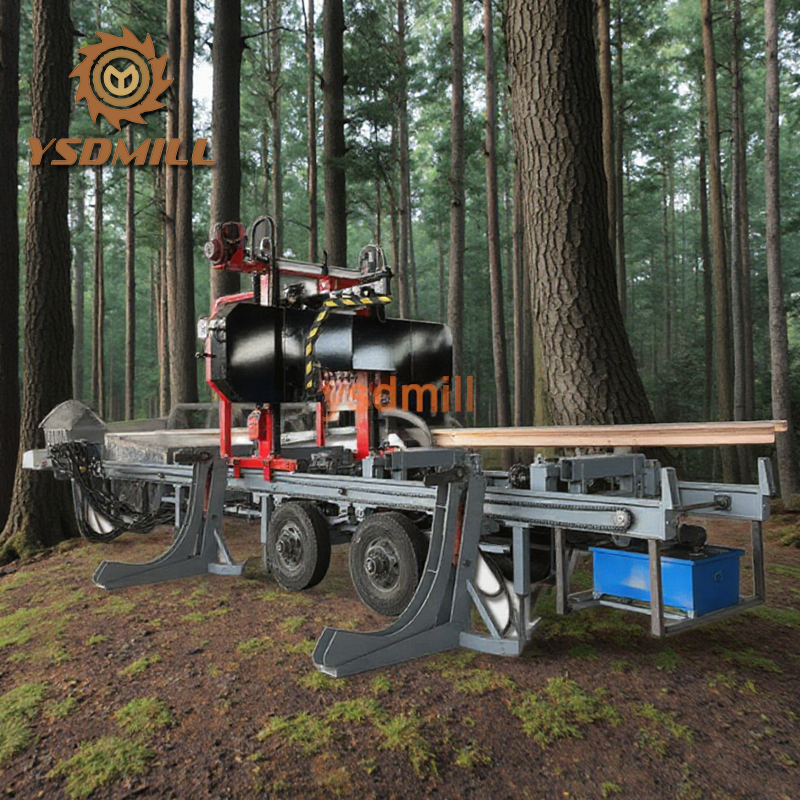
A sawmill can be used in remote forest areas, and portable sawmills are specifically designed for locations where transporting raw logs to a central sawmill is difficult or expensive.
Why sawmills work well in remote forests
Portable design: A portable band sawmill can be transported directly to the logging site.
Lower transportation costs: Logs can be processed into lumber near the forest, reducing the volume and weight that must be hauled.
Diesel power options: Diesel-powered sawmills can operate where grid electricity is unavailable.
On-site processing: Logs can be cut into boards, beams, or other dimensions immediately after harvesting.
Suitable for difficult terrain: Compact or trailer-mounted models are easier to move between remote locations.
What to consider
For remote forest operations, pay particular attention to:
Power source – Diesel is often practical where electricity is unavailable.
Portability – Check machine weight, trailer requirements, and whether the sawmill can be assembled on site.
Log size – Make sure the maximum log diameter and cutting length match your local timber.
Fuel and spare parts – Remote operations need reliable access to fuel, blades, bearings, and other wear parts.
Maintenance – Choose a machine that can be serviced easily with locally available tools and replacement parts.
Terrain – Consider how the machine and logs will be moved over rough or muddy ground.
For remote forests, a portable diesel band sawmill is often one of the most practical choices, especially for small-to-medium-scale timber processing.
If you're evaluating a sawmill for Africa, tropical forests, or other off-grid areas, the key factors are usually portability, diesel power, log capacity, and ease of maintenance.
